
Introduction
In a time of emergency or sudden pain with an injury, getting treated promptly can be very beneficial. Many individuals end up going to urgent care for faster medical treatment without having to endure traditional ER visits during emergency room visits when you do not experience life threatening conditions. However, some situations require the assistance of additional imagery in order to better depict what has occurred within a patients’ body.
The ideal urgent care with mri service would be when an urgent care provider recommends an mri in order to provide further diagnoses of specific muscles, joints, tendons, ligaments, nerves, spine and other parts of soft body tissues. Having urgent care and imaging services all within the same office space may help eliminate several appointments.
What Is Urgent Care With MRI?
In urgent care with MRI, the combination involves a same-day or walk-in examination and magnetic resonance imaging.
After examination by a healthcare professional from an urgent care center for such symptoms and for an existing condition, if MRI is considered medically warranted then an order for it may be placed.
MRI might be indicated in the assessment of such a condition as: Ligament and tendon injuries, muscle injuries, joint problems, problems of the spine and neck, nerve problems, particular athletic injuries and some defects of bone and soft tissues, long-term discomfort requires further investigation.
It differs from X-rays by being unable to diagnose by emitting ionizing radiation but rather through the application of strong magnetic fields together with radio waves.
7 Powerful Benefits of Urgent Care With MRI
1. Faster evaluations
One of the benefits is convenience. For instance, many urgent care centers work together to offer imaging services such as MRI at the same location you received your examination.
The possibility of expediting diagnosis and subsequent treatment could arise from not having to go to two separate locations for tests.
2. Better view of soft tissues
MRI is an extremely helpful method for gaining a comprehensive view of soft tissues. Unlike X-rays, MRI scans can also offer a clearer picture of parts of the anatomy that aren’t visible to the naked eye.
Conditions an MRI can help diagnose include:
- tendons
- ligaments
- muscles
- cartilage
- spinal discs
- nerves
- Other soft tissues
A pain in an of these can sometimes benefit from medical analysis by MRI.
3. Easy treatment for injuries
Many falls and sports-related injuries can lead to pain, even if not clearly seen on an X-ray.
A doctor can order an MRI if a suspected severe injury has taken place involving a soft tissue in your body. The injury is not life-threatening, but you still need prompt medical attention.Urgent Care With MRI
4. Fewer visits to health facilities
A patient can have a simpler experience in the medical system by visiting fewer clinics to get all the care they require. If you have work to do, it might be beneficial to just go to one location rather than visit the facility for exams at one location, then another place for an MRI.
5. Provides a roadmap for treatment
The MRI can serve to give your doctor additional insight into why they are experiencing such pain. Some possible treatments can include:
Bed rest and avoidance of physical activity
- Physical therapy
- Medication
A supportive device, such as a brace
referral to another physician for specialized evaluation and management Urgent Care With MRI.
Additional imaging
It goes without saying that an MRI itself can’t treat anything, it simply provides the data doctors need to give you instructions.
6. Used to diagnose ongoing pain
If an injury you have is persistent afterrest and treatment, the doctor might want to have an MRI on one or more of your body parts to check and see if something is wrong that you aren’t seeing. Ongoing neck, back, shoulder or hip and knee pain usually benefit greatly from an MRI scan.
7. Affordable and convenient for less-urgent problems
Some problems can not be diagnosed with an emergency room, because life threatening issues are dealt with there before any other concerns. If some advanced test like an MRI would need to be performed, then going to an urgent care facility would be more efficient. It can’t be over emphasized however that severe and or potentially life threatening issues require emergency rooms.Urgent Care With MRI.
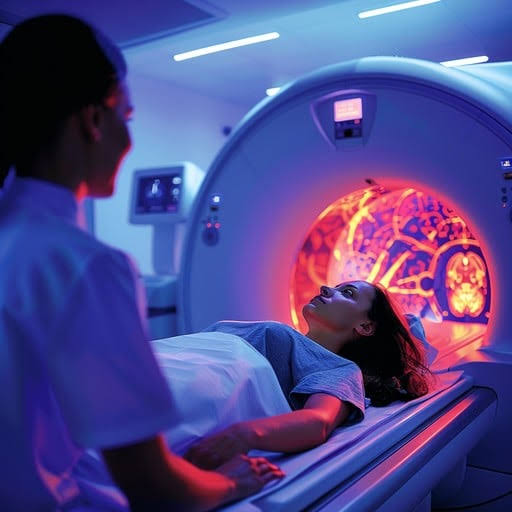
When Should You Consider an MRI?
The use of an MRI is not required for every injury or illness. Usually it is the health professional responsible for your treatment, following assessment of your symptoms and examination of you, who will decide on the need for the investigation.
You might be suitable for the procedure if you are suffering from:
- – Chronic or severe joint pain
- – Suspected ligamentous injury
- – A number of muscle or tendon pathologies
- – Unremitting back or neck pain
- – Symptoms indicative of nerve compression
- – A sporting injury which needs further investigation
- – Unknown symptoms which do not respond to initial treatment
It is possible the specialist will decide on using an X-ray, ultrasound or CT scan instead of or in conjunction with an MRI, or indeed undertake another investigation completely.Urgent Care With MRI
MRI vs. X-Ray: What’s the Difference?
MRI and X-ray have different types of information to provide: Feature MRI X-Ray Good forSoft tissues/complex details Bones/some chest areas Ionizing radiation None Required to use Some common use ligament/discs/muscles/nerves fracture and bone evaluation Imaging time Generally longer Typically faster Used for lig./disc./muscle./nerves fracture and bone Good detail Excellent soft tissue detail Good detail in many bone injury MRI your doctor can advise the most suited method to use
What Happens During an MRI?
If your doctor orders an MRI, you’ll likely be asked to remove metal objects before the scan.
How the Scan Works
You’ll lie on an adjustable table that slides into the MRI scanner.
You need to keep your body parts extremely still while the exam is underway.
You’ll hear loud knocking or tapping noises in the machine.
The length of the MRI exam varies from a few minutes to an hour or more, based on which area is being imaged and the type of examination.
Images are then interpreted by a radiologist or appropriately trained individual.
In some MRI exams, a contrast agent will be used to enhance the clarity of specific tissues. Your doctor will let you know if contrast is required.Urgent Care With MRI
Is MRI Safe?
MRI and Your Safety MRI is considered safe, as there are no ionizing radiations involved. The strong magnetic fields do require that patient information include implant, hardware or metal in or on the body. Prior to an MRI, let your doctor or technician know if you: wear a pacemaker or have an implanted device have metal fragments in your body have certain surgical implants have been injured by metal severe claustrophobia may be pregnant Your doctor or technician will assess if an MRI is suitable and if any special procedures need to be followed.
When Should You Go to an Emergency Room Instead?
Urgent care is not a substitute for the Emergency Department.When presenting with signs/symptoms which are life threatening, present at an emergency department, or ring emergency medical services:
- Chest pain/pressure that is extreme
- Shortness of breath
- Stroke signs or symptoms
- Any severe and uncontrollable bleeding
- Loss of consciousness
- Severe head trauma
- Sudden severe weakness
- Major trauma
- Seizures
Life threatening immediate medical problem.
If you are uncertain, do not hesitate to contact medical services to ascertain if you have a true medical emergency.
How to Prepare for an Urgent Care MRI
Preparation will vary based on the kind of MRI you are having.
For any office visit or appointment you may want to:
- Bring a list of your medicines with you. Provide your allergies and health history, including any implanted devices or medical support pieces and notify the provider of any existing conditions.
- Provide current medical devices like pace makers etc and be aware of how they interact with the magnetic forces of the MRI, check before with the MRI center before it is too late!
- Have a relaxed, non-metal clothing with no other metal included and also some other items you might want to be without if not absolutely mandatory! (like, metal watches as)
- Ask instructions on when to eat or fast before the MRI; this is necessary if you want a clean examination of organs and soft tissues that might appear clearer without consumption in the system.
- Check into your office or medical appointment in advance so paperwork and screening can be completed by personnel.
- Let the MRI personnel know if you feel the need for sedative or if you feel claustrophobic within a tight, controlled space because you should not be alone even at first entrance as that will be the time, you must have somebody with you and they will know your situation.
Why Choose er of Coppell?
The ER at Coppell, when considering non-life threatening conditions requiring speedy medical evaluation in the Coppell community, serves as an available medical solution when considering evaluating more immediate medical conditions. An experienced medical staff can assess you, determine if more involved imaging studies are indicated, and identify a plan to evaluate further depending upon the diagnosis you present with. When you consider an illness or injury with concerning symptoms, contacting one of the available facilities can help guide you about treatment that will meet your medical need as in whether you will benefit from urgent care, MRI, or ER care.
Final Takeaway
MRI with immediate care facilities offer easy accessibility to those who require prompt evaluation and access to more advanced imaging techniques. This form of technology is particularly useful for evaluating soft tissues including ligaments, tendons, muscles, cartilage, components of the spine, and some nerves. Most importantly is seeking proper medical evaluation initially. Not all injuries require an MRI and those that present with serious signs/symptoms should not be put off as an endeavor to seek an MRI immediate care facility.
For more blogs visit : https://bytesflux.com/7-powerful-facts-about-small-bone-fracture-er-of-coppell-guide/
Pingback: 7 Powerful Facts About Constant Headache Dizziness - BytesFlux